
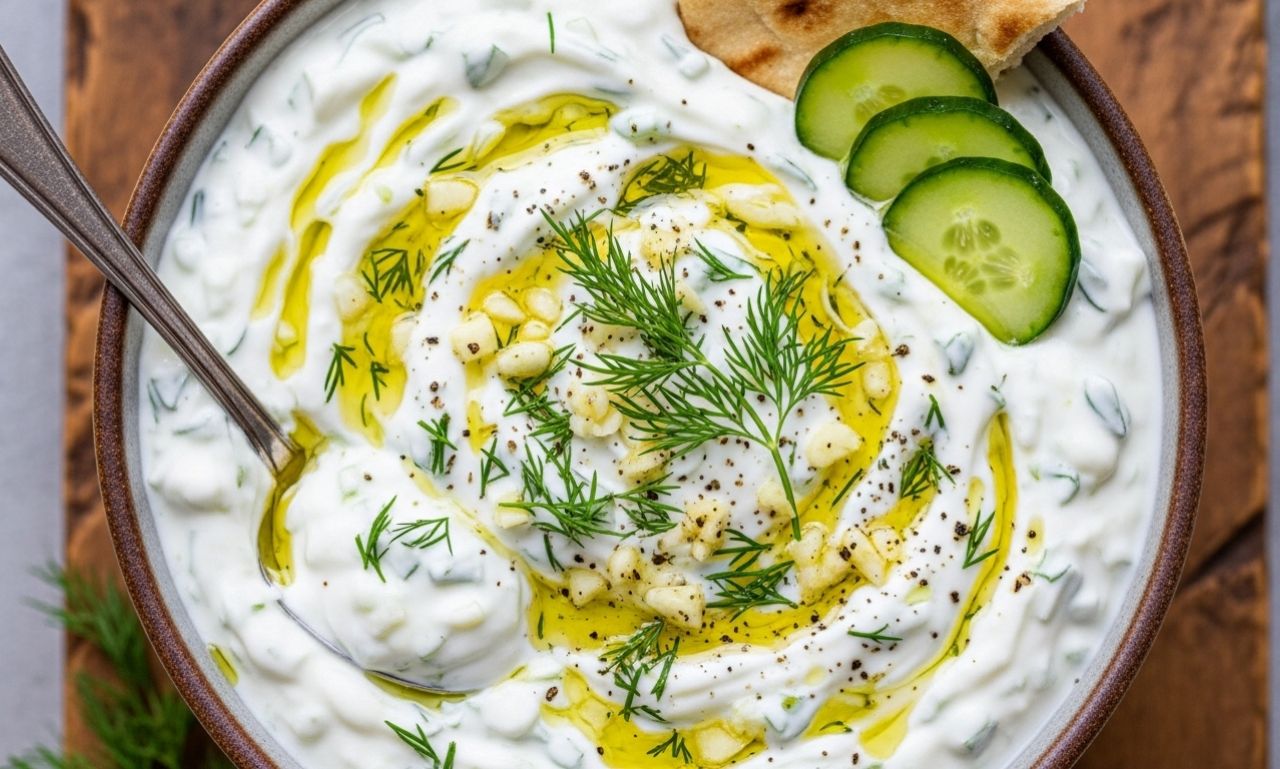
Tzatziki: The Classic Greek Yogurt Sauce Everyone Loves
Tzatziki is a traditional Greek condiment made with yogurt, cucumber, garlic, olive oil, lemon juice, and fresh herbs like dill or mint. Loved for its creamy texture, tangy flavor, and refreshing taste, tzatziki is a staple in Mediterranean cuisine. Whether served as a dip, sauce, or accompaniment to grilled meats, vegetables, or pita bread, it has gained worldwide popularity for its versatility and health benefits.
The origins of tzatziki date back to ancient Greece, where yogurt-based sauces were commonly paired with vegetables and grains. Over time, tzatziki evolved into the recipe we know today, combining cool cucumbers and creamy yogurt with pungent garlic and aromatic herbs. Its balance of flavors — savory, tangy, and slightly sweet — makes tzatziki a favorite in both home kitchens and upscale restaurants.
Ingredients and Traditional Preparation
Yogurt Base
The foundation of tzatziki is yogurt, typically thick Greek-style yogurt. The creamy, slightly tangy flavor provides a smooth base that contrasts beautifully with crunchy cucumber and sharp garlic. For the healthiest option, choose unsweetened, full-fat or low-fat Greek yogurt.
Cucumber
Cucumber gives tzatziki its signature cooling effect. Grated or finely chopped, it should be squeezed to remove excess water to prevent the sauce from becoming watery. English cucumbers are popular for their thin skins and mild flavor.
Garlic and Herbs
Garlic adds pungency, while fresh herbs like dill or mint bring aromatic freshness. Some recipes also include parsley or oregano. The combination of herbs elevates the sauce and balances the tang of the yogurt.
Olive Oil and Lemon Juice
A drizzle of high-quality olive oil adds richness, and lemon juice provides acidity that brightens the flavors. Salt and pepper round out the taste, allowing each ingredient to shine.
How to Make Tzatziki
Making tzatziki at home is simple and quick:
-
Grate one cucumber and squeeze out excess moisture.
-
Mix the cucumber with 1 cup of Greek yogurt in a bowl.
-
Add 2–3 minced garlic cloves, 1 tablespoon lemon juice, and 1 tablespoon olive oil.
-
Stir in 1–2 teaspoons chopped fresh dill or mint.
-
Season with salt and pepper to taste.
-
Chill in the refrigerator for 30 minutes to let flavors meld before serving.
Optional variations include adding a teaspoon of vinegar for extra tang, a pinch of smoked paprika for subtle heat, or a small amount of grated onion for additional depth.
Uses of Tzatziki
As a Dip
Tzatziki is ideal for dipping fresh vegetables, pita chips, or crackers. Its creamy, tangy profile complements crunchy vegetables like carrots, celery, and bell peppers.
With Grilled Meats
In Greek cuisine, tzatziki is often paired with lamb, chicken, or beef kebabs. It adds a cooling contrast to spiced or char-grilled meats, enhancing the overall dining experience.
In Sandwiches and Wraps
Spread tzatziki on pita bread or flatbreads to make gyros, falafel wraps, or grilled chicken sandwiches. Its creamy texture keeps sandwiches moist and flavorful.
Salad and Side Sauce
Tzatziki can also serve as a light salad dressing or as a side sauce for roasted vegetables, potatoes, and seafood. Its versatility makes it a healthy, flavorful addition to a variety of dishes.
Health Benefits of Tzatziki
Tzatziki is not only delicious but also nutritious:
-
Rich in Protein: Greek yogurt provides protein that supports muscle health.
-
Probiotics: Yogurt contains live cultures that aid digestion and support gut health.
-
Low in Calories: Tzatziki is lighter than creamy mayonnaise or sour cream-based sauces.
-
High in Vitamins: Cucumbers contribute vitamin K and antioxidants, while herbs like dill offer additional nutrients.
Because of these benefits, tzatziki is a popular choice for health-conscious eaters looking to enjoy flavor without excess calories or fat.
Tzatziki Variations Around the World
While the traditional Greek version remains the most famous, similar yogurt-cucumber sauces exist in other cultures:
-
Cacık (Turkey): Often thinner, with added water and mint.
-
Raita (India): Uses yogurt, cucumber, and spices like cumin or coriander.
-
Tarator (Balkans): May include walnuts and garlic, used as a cold soup or sauce.Each variation reflects local tastes and ingredients but maintains the core concept of yogurt combined with vegetables or herbs.
Tips for Making the Best Tzatziki
-
Use thick yogurt: Strain regular yogurt through a cheesecloth if needed.
-
Drain cucumbers well: Removing moisture prevents watery tzatziki.
-
Let it chill: Refrigeration enhances the flavors and texture.
-
Balance flavors: Adjust garlic, lemon, and herbs to personal taste.
-
Serve fresh: Tzatziki is best consumed within 2–3 days.
Tzatziki in Modern Cuisine
Today, tzatziki has crossed Mediterranean borders and is a favorite in global cuisine. Restaurants worldwide serve it as a dip, sandwich spread, or side sauce. Its versatility also makes it suitable for creative fusion dishes, such as tzatziki pasta salad, avocado toast with tzatziki, or as a topping for grain bowls.
Conclusion:
Tzatziki is a timeless sauce that combines simplicity, flavor, and nutrition. Its creamy yogurt base, refreshing cucumber, and fragrant herbs make it a versatile addition to countless dishes. Beyond taste, tzatziki’s health benefits and adaptability ensure its place in kitchens worldwide. Whether you’re enjoying a traditional gyro, dipping vegetables, or experimenting with modern recipes, tzatziki continues to prove why it’s a beloved staple of Mediterranean cuisine.