
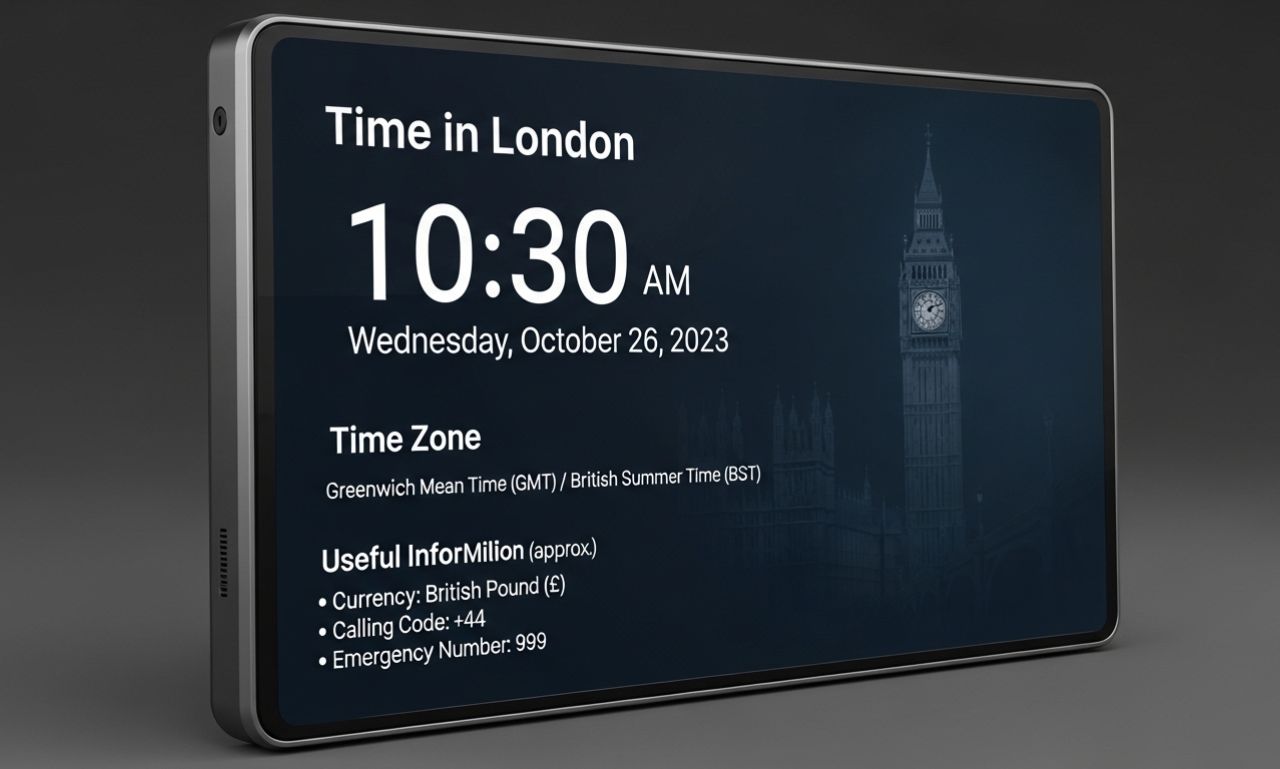
Time in London – Current Time, Time Zone, and Useful Information
London, the capital of United Kingdom, is a major global city known for its history, culture, and commerce. Knowing the time in London is important for travelers, business professionals, and anyone coordinating with people in the city. London operates on Greenwich Mean Time (GMT) during the winter and British Summer Time (BST) in the summer, which can affect international communication and travel plans.
This article provides a comprehensive guide to the current time in London, its time zone, daylight saving practices, and tips for planning your schedule.
Current Time in London
The current time in London changes depending on the season:
-
Standard Time: Greenwich Mean Time (GMT)
-
Daylight Saving Time: British Summer Time (BST), which is GMT+1
You can always check online tools or world clock apps to get the exact time in London at any moment.
London Time Zone Explained
London is located in the GMT/BST time zone. Here’s how it works:
Greenwich Mean Time (GMT)
-
Observed during late October to late March
-
Considered the baseline for all other world time zones
-
No offset from UTC (Coordinated Universal Time)
British Summer Time (BST)
-
Observed from late March to late October
-
Clocks are moved forward one hour (GMT+1)
-
Provides longer daylight hours in the evening
Daylight saving time can affect scheduling for travelers and businesses interacting with London, so it’s important to check whether GMT or BST is currently in effect.
Time Difference Between London and Other Major Cities
Knowing the time in London helps when coordinating international calls or travel plans. Some examples include:
-
New York (EST/EDT): London is 5 hours ahead in winter, 4 hours ahead in summer
-
Los Angeles (PST/PDT): London is 8 hours ahead in winter, 7 hours ahead in summer
-
Tokyo (JST): London is 9 hours behind in winter, 8 hours behind in summer
-
Sydney (AEST/AEDT): London is 11 hours behind in winter, 10 hours behind in summer
Always check local daylight saving adjustments to ensure accurate time coordination.
Why London Time Matters
London is a global financial hub, and its time affects markets, international businesses, and travel schedules:
-
Financial Markets: The London Stock Exchange (LSE) operates on London local time, affecting global trading hours.
-
Travel Planning: Flights, trains, and international connections are scheduled according to local time.
-
Communication: Coordinating meetings or calls across time zones requires knowing London time.
By understanding London’s time zone and current time, you can avoid missed calls, flights, and appointments.
Daylight Saving Time in London
Daylight saving in London starts and ends as follows:
-
Start (Spring Forward): Last Sunday in March – clocks move forward 1 hour
-
End (Fall Back): Last Sunday in October – clocks move back 1 hour
This shift impacts sunrise and sunset times and helps maximize daylight during warmer months.
Tools to Track Time in London
Several tools make it easy to track time in London:
-
World Clock Apps: Many smartphones have built-in world clock features.
-
Online Time Websites: Websites like timeanddate.com provide accurate, live updates.
-
Smart Assistants: Devices like smart speakers or digital assistants can provide current London time.
These tools are particularly useful for travelers, remote workers, and global businesses.
Tips for Adjusting to London Time
If you’re traveling to London or coordinating with people there, here are some tips:
-
Plan Ahead: Check the current time in London before scheduling meetings.
-
Account for Daylight Saving: Make sure to note whether BST or GMT is active.
-
Use Apps: Calendar apps and world clocks can automatically adjust for time differences.
-
Consider Jet Lag: Travelers may need a day or two to adjust to London time, especially after long flights.
These strategies help reduce confusion and ensure smooth planning.
Fun Facts About Time in London
-
London’s Greenwich Mean Time (GMT) originated at the Royal Observatory, which serves as the prime meridian (0° longitude).
-
GMT is the reference point for all global time zones.
-
London observes daylight saving time like most European cities, but not all countries do.
Conclusion
The time in London is more than just numbers on a clock; it is essential for travel, business, and communication across the globe. Whether you are coordinating international meetings, booking flights, or planning your vacation, understanding GMT and BST, checking London’s current time, and accounting for time differences will help you stay on schedule.
Using online tools, world clocks, and careful planning ensures that you always know the right time in London — keeping you punctual and connected, wherever you are.