
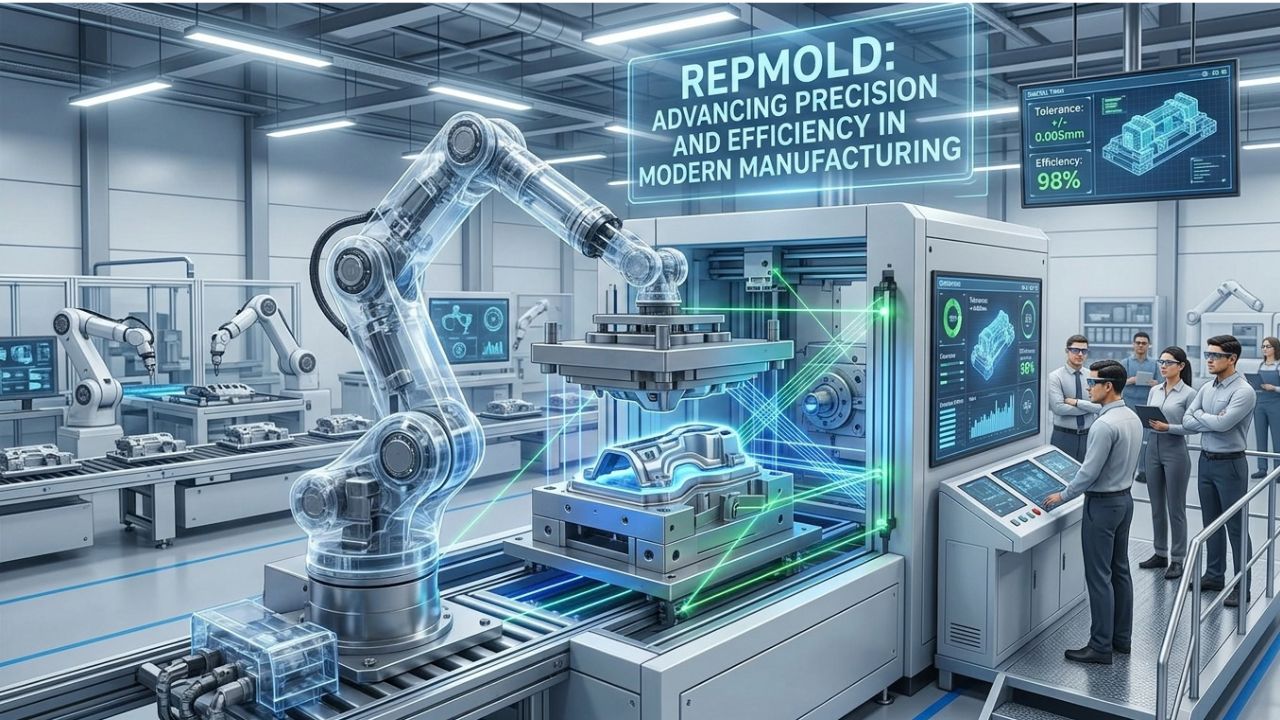
Repmold: Advancing Precision and Efficiency in Modern Manufacturing
Repmold is a concept closely associated with modern manufacturing systems that focus on precision molding, replication processes, and efficient production techniques. In today’s highly competitive industrial environment, businesses are constantly searching for ways to produce high-quality components at lower costs and faster speeds. Repmold plays an important role in achieving these goals.
From automotive parts to consumer goods and industrial components, Repmold-based processes help ensure consistency, accuracy, and scalability in production. As industries evolve, the demand for reliable and efficient molding solutions continues to grow.
What Is Repmold?
Repmold refers to a manufacturing approach or system focused on creating precise molds and replicated components for mass production. It is commonly linked with tooling, mold design, and production optimization techniques.
The main idea behind Repmold is to ensure that every produced item maintains uniform quality while reducing material waste and production errors. This makes it especially valuable in industries where accuracy and repeatability are essential.
In simple terms, Repmold helps manufacturers turn design concepts into consistent, real-world products efficiently and reliably.
Importance of Repmold in Industry
Precision and Accuracy
One of the most important benefits of Repmold is its ability to produce highly accurate components. Even minor defects in manufacturing can lead to product failure or reduced performance.
Repmold systems are designed to minimize such errors by improving mold quality and production control.
Efficiency in Production
Modern manufacturing requires speed without compromising quality. Repmold allows manufacturers to streamline production processes, reduce downtime, and increase output.
This leads to faster delivery times and improved operational efficiency.
Cost Optimization
Reducing waste and improving production efficiency directly impacts costs. Repmold helps companies save money by minimizing defective products and improving material usage.
Over time, this results in better profit margins and more sustainable operations.
Applications of Repmold
Automotive Industry
The automotive sector heavily relies on precision parts. Repmold is used to create dashboards, interior components, engine parts, and structural elements with high consistency.
Consumer Products
Everyday items such as plastic containers, electronic housings, and household goods are often produced using molding techniques supported by Repmold systems.
Medical Equipment
Medical manufacturing requires strict quality control. Repmold ensures that medical components are produced with accuracy and meet safety standards.
Industrial Manufacturing
Heavy machinery and industrial tools also depend on durable molded components that can withstand demanding environments.
Benefits of Using Repmold Systems
High Product Consistency
Repmold ensures that every product coming out of a production line is nearly identical in quality and structure. This is crucial for maintaining brand reliability.
Reduced Production Waste
Efficient mold design reduces material waste, making manufacturing more environmentally friendly and cost-effective.
Scalability
As demand grows, manufacturers can scale production without losing quality. Rep mold systems are designed to support both small and large production volumes.
Faster Development Cycles
With improved mold design and production planning, companies can bring products to market faster.
Challenges in Repmold Implementation
Initial Setup Costs
Advanced molding systems require investment in equipment, design tools, and skilled labor. This can be expensive for smaller manufacturers.
Technical Expertise
Operating and maintaining Repm old systems requires trained professionals who understand mold design and production engineering.
Maintenance Requirements
Regular maintenance is necessary to ensure consistent performance and avoid production delays.
Technological Improvements in Repmold
Automation in Manufacturing
Automation plays a major role in improving molding efficiency. Machines can now perform repetitive tasks with high precision and minimal human error.
Digital Design Tools
Computer-aided design (CAD) and simulation software allow engineers to test molds before production begins, reducing errors and saving time.
Smart Manufacturing Systems
Modern factories use smart sensors and data analytics to monitor production in real time, improving efficiency and quality control.
Advanced Materials
New materials are improving mold durability and product strength, expanding the possibilities of Rep mold applications.
Future of Repmold
The future of Repm old looks promising as industries continue to demand faster, cheaper, and more precise manufacturing solutions.
Key trends include:
- Increased automation
- AI-driven manufacturing optimization
- Greater sustainability focus
- Expansion of customized production
- Integration with smart factories
These developments will make Re pmold even more important in global manufacturing systems.
Conclusion
Re pmold represents an essential part of modern manufacturing, focusing on precision, efficiency, and scalability. It helps industries produce high-quality products consistently while reducing costs and improving production speed.
Although challenges such as setup costs and technical requirements exist, the long-term benefits make it a valuable solution for many industries. As technology continues to advance, Repmo ld will remain a key driver of innovation in industrial production.