
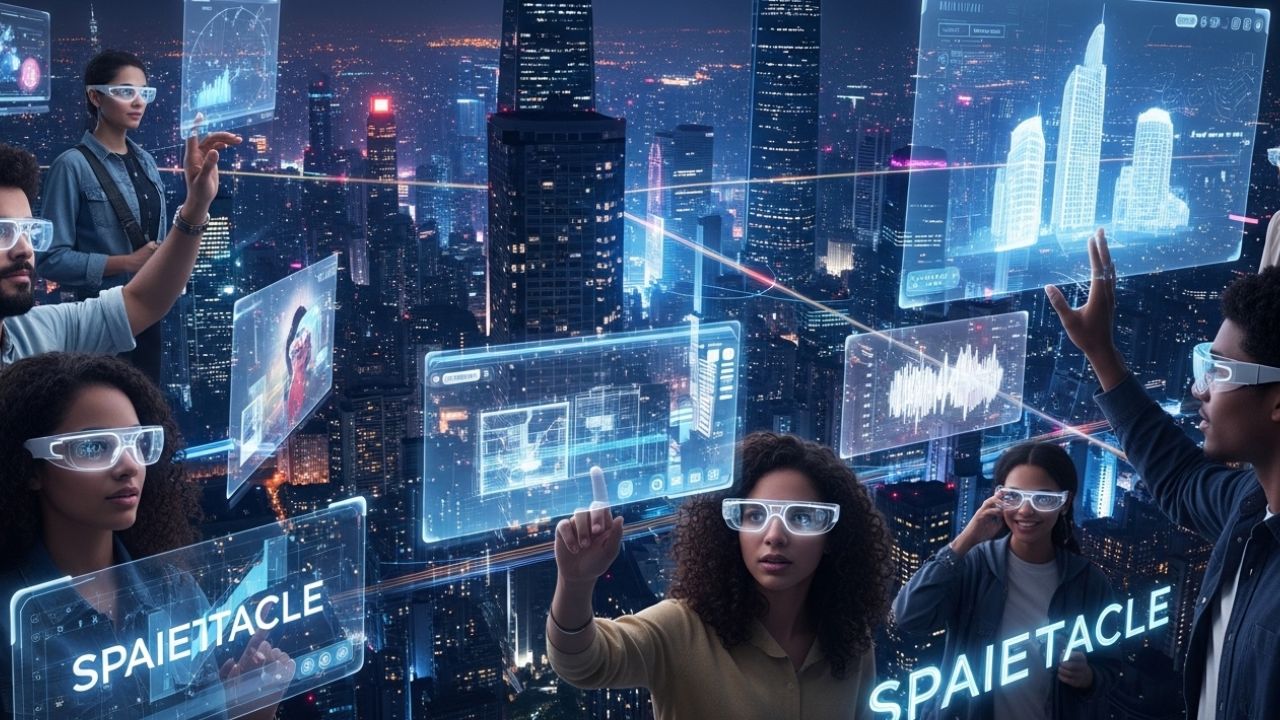
Spaietacle: Exploring Immersive Spatial Experiences in Modern Digital Culture
Spaietacle is an emerging concept in digital culture and experiential design that merges the ideas of “space” and “spectacle.” Unlike traditional performances, where audiences are passive observers, a Spaietacle immerses participants in an interactive environment. It is not just something you see — it is something you inhabit and explore. By blending spatial design with storytelling, digital technology, and interactive elements, Spaietacle creates dynamic experiences that engage multiple senses and promote active participation. This article explores the origins, characteristics,applications, and significance of Spaietacle in contemporary media and culture.
Origins and Concept of Spaietacle
Etymology and Definition
The word Spaietacle combines “space” and “spectacle,” emphasizing environments where the spatial design itself becomes a central element of the performance or experience. Early references appear in interactive art and AR/VR communities, describing immersive experiences that go beyond traditional theater, cinema, or exhibition formats.
Cultural and Technological Roots
Spaietacle draws inspiration from immersive theater, digital exhibitions, projection mapping, and augmented reality. The common thread is interactivity: participants do not just witness a spectacle—they influence it, navigate through it, and co-create meaning by engaging with the space.
Defining Features of a Spaietacle
Immersive Environments
A defining feature of Spaietacle is an immersive environment where participants are surrounded by sensory cues — visuals, audio, and tactile elements — that react to their presence or choices. These environments can be virtual, physical, or hybrid.
Interactive Participation
Unlike traditional spectacles, a Spaietacle requires participants to engage. Motion sensors, spatial triggers, and responsive design allow actions within the space to influence the outcome or presentation.
Spatial Storytelling
In Spaietacle, storytelling is tied to physical movement. The narrative unfolds based on where participants go, what they touch, or how they interact with the environment, creating a nonlinear and highly personalized experience.
Examples of Spaietacle
Immersive Art Exhibitions
Art galleries and museums increasingly adopt Spaietacle-style displays. For example, rooms where light, sound, and projections change based on visitor movement allow attendees to experience artwork in an evolving, participatory way.
Virtual and Augmented Reality
AR and VR games or experiences often embody Spaietacle principles. Users navigate three-dimensional spaces where actions trigger visual, audio, and tactile responses, making the virtual world feel al ive and responsive.
Public Installations and Festivals
Urban installations, such as projection-mapped buildings or responsive light shows, transform public spaces into interactive spectacles. These experiences allow large audiences to engage physically with digital content, blurring the line between audience and performer.
Why Spaietacle Matters
Enhancing Engagement
In a culture increasingly focused on experiences, Spa ietacle provides highly engaging, participatory forms of entertainment and education that traditional media cannot replicate.
Bridging Physical and Digital Worlds
Spaiet acle leverages both real-world spaces and digital overlays to create hybrid experiences, combining tactile presence with virtual enhancements to captivate audiences.
Emotional and Cognitive Impact
Immersive, participatory experiences like Spaieta cle activate multiple senses, creating memorable and emotionally resonant encounters that strengthen learning, enjoyment, or brand engagement.
Technologies Behind Spaietacle
Augmented Reality (AR) and Virtual Reality (VR)
AR and VR are central to many Spaieta cle experiences, enabling participants to explore interactive environments, manipulate objects, or trigger events that adapt to user input.
Spatial Audio
Spatial audio technologies allow sound to change based on participant location, orientation, or movement, enhancing the sense of immersion in Spaiet acle environments.
Sensors and Projection Mapping
Motion sensors, touch-sensitive surfaces, and projection-mapped visuals allow physical environments to react to participant behavior, creating an evolving, interactive spectacle.
Applications of Spaietacle
Education and Learning
Classrooms, museums, and science centers use Spai etacle to make learning interactive and memorable. Participants explore topics by moving through physical or virtual simulations that teach through experience.
Entertainment and Gaming
Theme parks, escape rooms, and interactive games increasingly adopt Sp aietacle design to create immersive worlds where player decisions shape the environment and narrative.
Art and Culture
Contemporary artists use Spaie tacle to push boundaries, creating installations where viewers are active participants and the space itself conveys the artistic message.
Marketing and Brand Engagement
Brands adopt Spa ietacle in experiential marketing campaigns, turning showrooms, pop-ups, and events into immersive experiences that engage customers and encourage social sharing.
Challenges in Creating Spaietacle
Technical Complexity
Building a Spaiet acle requires multidisciplinary skills, including spatial design, technology integration, interactive programming, and narrative creation.
Accessibility
Not all participants may experience Spaieta cle fully due to mobility, sensory sensitivity, or technical barriers. Designers must consider inclusive approaches to maximize participation.
Cost
High-quality Spaieta cle experiences can require expensive equipment and planning, from AR/VR technology to interactive sensors and custom environments.
The Future of Spaietacle
Everyday Integration
As AR glasses, mixed reality devices, and wearable tech become widespread, Spaiet acle may increasingly appear in everyday life — from interactive urban spaces to home-based VR experiences.
Personalization
Future Spa ietacle experiences will likely adapt dynamically to each participant, using AI and sensor data to create individualized paths through environments.
Expanding Cultural and Educational Roles
Museums, schools, and cultural institutions may increasingly adopt Spaie tacle to transform passive observation into active exploration, providing richer and more memorable experiences.
Conclusion
Spaiet acle is a transformative concept redefining immersive experiences, blending space and spectacle into participatory, interactive environments. By allowing audiences to inhabit and shape the experience, Spai etacle pushes beyond traditional media, creating memorable, emotionally engaging encounters in art, education, entertainment, and digital culture. As technology evolves, this concept will continue to shape how humans interact with space, story, and each other — offering a glimpse into the future of immersive experiences.