
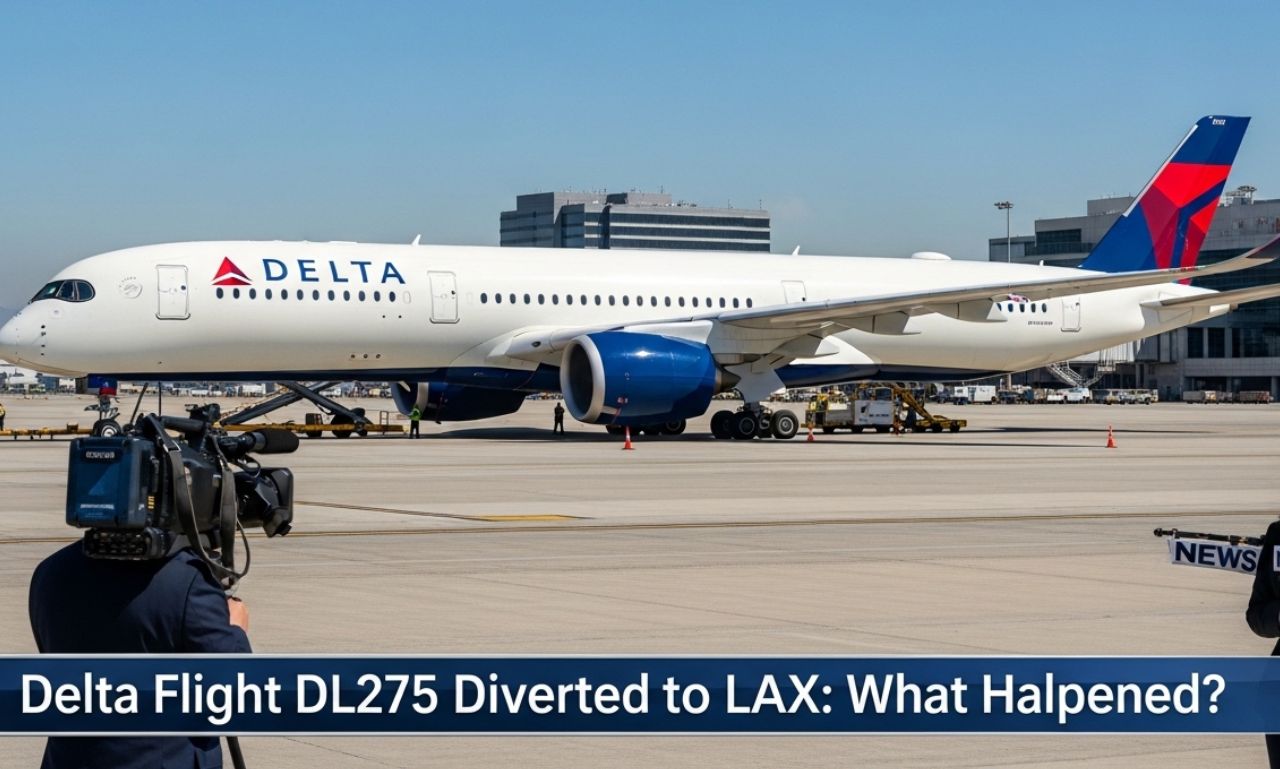
Delta Flight DL275 Diverted to LAX: What Happened and Why It Matters
On May 28, 2025, Delta flight DL275 — scheduled to fly from Detroit Metropolitan Wayne County Airport (DTW) to Tokyo Haneda Airport (HND) — was unexpectedly diverted to Los Angeles International Airport (LAX) due to an in‑flight technical issue, prompting concern among passengers and travel watchers.
Rather than continuing its long‑haul trans‑Pacific journey, the aircraft made a safe emergency landing at LAX, a major Delta hub with advanced maintenance facilities. Below is a comprehensive look at what led to the diversion, how it unfolded, and what it meant for passengers and airline operations.
Flight Details: DL275 From Detroit to Tokyo
Delta flight DL275 was operating a regularly scheduled trans‑Pacific service using an Airbus A350‑900 aircraft (registered N508DN), departing from Detroit (DTW) and bound for Tokyo Haneda (HND). This long‑haul route typically crosses the North Pacific, beyond North American airspace.
The aircraft had been cruising at altitude when the flight crew detected a problem that necessitated an immediate diversion.
Why DL275 Was Diverted to LAX
Technical Issue With Engine Anti‑Ice System
The primary reason Delta flight DL275 diverted to LAX was a technical malfunction involving the Airbus A350’s engine anti‑ice system — a component crucial for preventing ice buildup on engine parts during high‑altitude flight, especially over colder regions.
Anti‑ice systems are essential on long‑haul aircraft because, at high altitudes and in low temperatures, ice formation can affect engine performance and safety. When the system indicated a fault, the flight crew elected to divert to the nearest suitable airport with adequate maintenance capabilities. LAX — a strategic hub for Delta — offered both the runway length and technical support needed to handle such an issue.
How the Diversion Happened
Once the issue was detected, the pilot communicated with air traffic control and began redirecting DL275 toward Los Angeles. The diversion added significant flight time compared to a typical trans‑Pacific route — the aircraft reportedly flew for more than 12 hours before landing safely on Runway 06R at LAX early on May 28, 2025.
Flight tracking data and passenger reports indicate that the diversion was handled professionally and efficiently, with no injuries or serious issues reported during or after landing.
What Happened After the Landing
After safely touching down at LAX, Delta Air Lines took several steps to assist passengers affected by the diversion:
-
DL275 was grounded while technicians inspected and resolved the engine anti‑ice problem.
-
The remaining scheduled portion of the service to Tokyo was cancelled.
-
Passengers were rebooked on alternative flights to continue to their final destination.
-
The aircraft remained in Los Angeles for approximately 18.5 hours before returning to service.
Delta likely provided accommodations or travel vouchers as needed, following its operational procedures for diverted flights — including lodging or transportation support when flights land away from their original terminus late at night.
Passenger Experience and Reactions
Social media posts from witnesses and passengers tracking the event confirmed the diversion was serious but managed safely by the flight crew. Some passengers noted announcements from the cockpit regarding the technical nature of the issue and acknowledged the pilots’ professionalism in ensuring a secure landing at LAX.
Despite being an unexpected detour, there were no reported injuries or emergencies on board. Many travelers were redirected to future flights or provided accommodations while the airline arranged onward travel plans.
Why LAX Was Chosen for Diversion
Several factors made Los Angeles International Airport (LAX) the most logical choice for diverting DL275:
-
Delta Hub: LAX is one of Delta’s major U.S. hubs, equipped with mechanics and parts for long‑range aircraft like the Airbus A350.
-
Runway Length: LAX has long runways capable of accommodating large wide‑body jets safely.
-
Support Infrastructure: The airport has extensive facilities for passenger care, maintenance support, and onward flight operations.
-
Weather and Safety: Favorable weather and operational readiness often make LAX a preferred diversion option on the U.S. West Coast.
Safety and Aviation Protocols
When an aircraft experiences a technical issue mid‑flight — particularly one involving engine systems — standard aviation protocol requires pilots to prioritize passenger safety and divert to the nearest suitable airport. This includes ensuring the aircraft remains within safe operational limits and landing where proper maintenance teams can assess and resolve the problem.
Aircraft crews and airline operations routinely train for such events, and international safety standards mandate diversion rather than risking continuation into potentially remote airspaces without nearby landing options.
What This Means for Travelers
While flight diversions can be stressful for passengers, they reflect a commitment to safety first — both by the flight crew and Delta’s operational command. Choosing to divert DL275 to LAX ensured that the aircraft could be examined, potential risks mitigated, and passengers cared for without continuing into more isolated regions over the Pacific.
Passengers affected by diversions typically receive:
-
Rebooking on future flights
-
Accommodation or meal vouchers
-
Updates from airline staff or customer service teams
-
Access to airport customer support for travel adjustments
These measures help reduce disruption and maintain traveler confidence during unexpected situations.
Conclusion
Delta flight DL275 from Detroit to Tokyo was diverted to Los Angeles International Airport (LAX) in late May 2025 due to a technical anti‑ice system issue in one of the aircraft’s engines. The expert judgment of the flight crew and the airline’s safety protocols ensured that the flight landed safely, passengers were looked after, and the aircraft received necessary inspection and maintenance. Such diversions underline how aviation safety always takes priority when unexpected issues arise mid‑flight.