
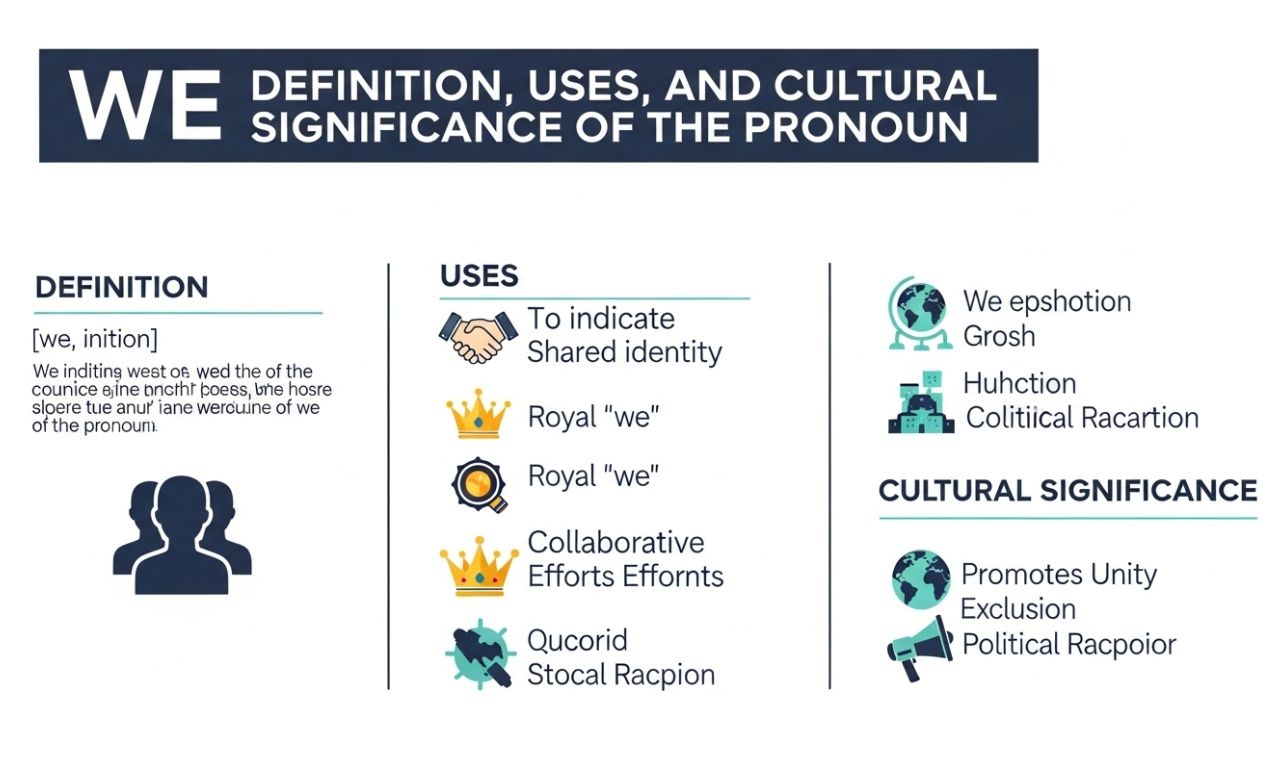
We: Definition, Uses, and Cultural Significance of the Pronoun
The word we is one of the most commonly used pronouns in the English language. Simple in appearance, it carries profound significance in communication, identity, and social interaction. Understanding how we functions grammatically and culturally can enhance both writing and interpersonal communication skills.
Definition of “We”
In English grammar, we is a first-person plural pronoun. It is used to refer to a group of people that includes the speaker. For example:
-
“We are going to the park.”
-
“We believe in teamwork and collaboration.”
Unlike singular pronouns like I, we emphasizes collective identity and shared experiences.
Grammatical Uses of “We”
1. Subject Pronoun
We is primarily used as the subject of a sentence:
-
“We enjoy reading books together.”
-
“We will arrive at 5 PM.”
It indicates that the speaker is part of the group performing the action.
2. Inclusive vs. Exclusive “We”
Some languages differentiate between inclusive (speaker + listener) and exclusive (speaker + others, excluding listener) forms of “we,” but English relies on context.
-
Inclusive example: “We are going to the movies” (listener is included).
-
Exclusive example: “We have finished our project” (listener may not be included).
Understanding context is essential to avoid miscommunication.
3. Pronoun Agreement
When using we, verbs must agree in number. We always takes plural verb forms:
-
Correct: “We are happy.”
-
Incorrect: “We is happy.”
Plural agreement applies regardless of how many individuals are in the group; even if it is only one other person, the verb remains plural.
Importance of “We” in Communication
The pronoun we plays a significant role in fostering connection and shared identity. It conveys inclusion, collaboration, and community. Using we can make language feel cooperative and supportive rather than isolated or confrontational.
1. Teamwork and Collaboration
In workplaces, schools, and social organizations, we encourages collective responsibility:
-
“We need to complete this project by Friday.”
-
“We value each team member’s contribution.”
2. Social and Cultural Identity
The pronoun we often reflects cultural or group identity. Communities, nations, or movements use we to emphasize unity:
-
“We celebrate our heritage every year.”
-
“We stand together for justice.”
This usage strengthens a sense of belonging and shared purpose.
“We” in Literature and Media
Authors and speakers frequently use we to create inclusivity and engage audiences. Speeches, essays, and novels often begin with we to draw readers or listeners into a collective experience.
For example:
-
“We hold these truths to be self-evident…” – emphasizes collective belief.
-
Poets often use we to evoke shared emotion or memory.
In media, we helps establish relatability and empathy, whether in advertising, television, or social campaigns.
Common Phrases Using “We”
-
We the people – emphasizes collective governance and democracy.
-
We are one – conveys unity and solidarity.
-
We will overcome – inspires hope and collective action.
-
We live and learn – reflects shared human experience.
These phrases illustrate how we extends beyond grammar to convey values, emotion, and social cohesion.
Differences Between “We” and Other Pronouns
-
We vs. I: We refers to a group; I refers to the speaker only.
-
We vs. You: We includes the speaker; you refers to the listener.
-
We vs. They: We includes the speaker; they refers to a group excluding the speaker.
Understanding these differences helps maintain clarity and appropriate tone in both writing and conversation.
Psychological and Social Significance
Using we rather than I can create a sense of shared responsibility and reduce conflict. Psychologists note that we-language fosters cooperation and strengthens interpersonal bonds. Leaders often use we to motivate groups, while educators and counselors use it to build trust and collaboration.
Conclusion
The pronoun we is simple yet powerful, carrying weight in grammar, communication, and culture. It signifies collective identity, shared responsibility, and unity, whether in casual conversation, literature, or public speaking. Understanding its grammatical use, context, and cultural significance helps individuals communicate effectively and foster stronger connections with others.
By appreciating the nuances of we, speakers and writers can strengthen inclusion, collaboration, and shared purpose in every interaction.