
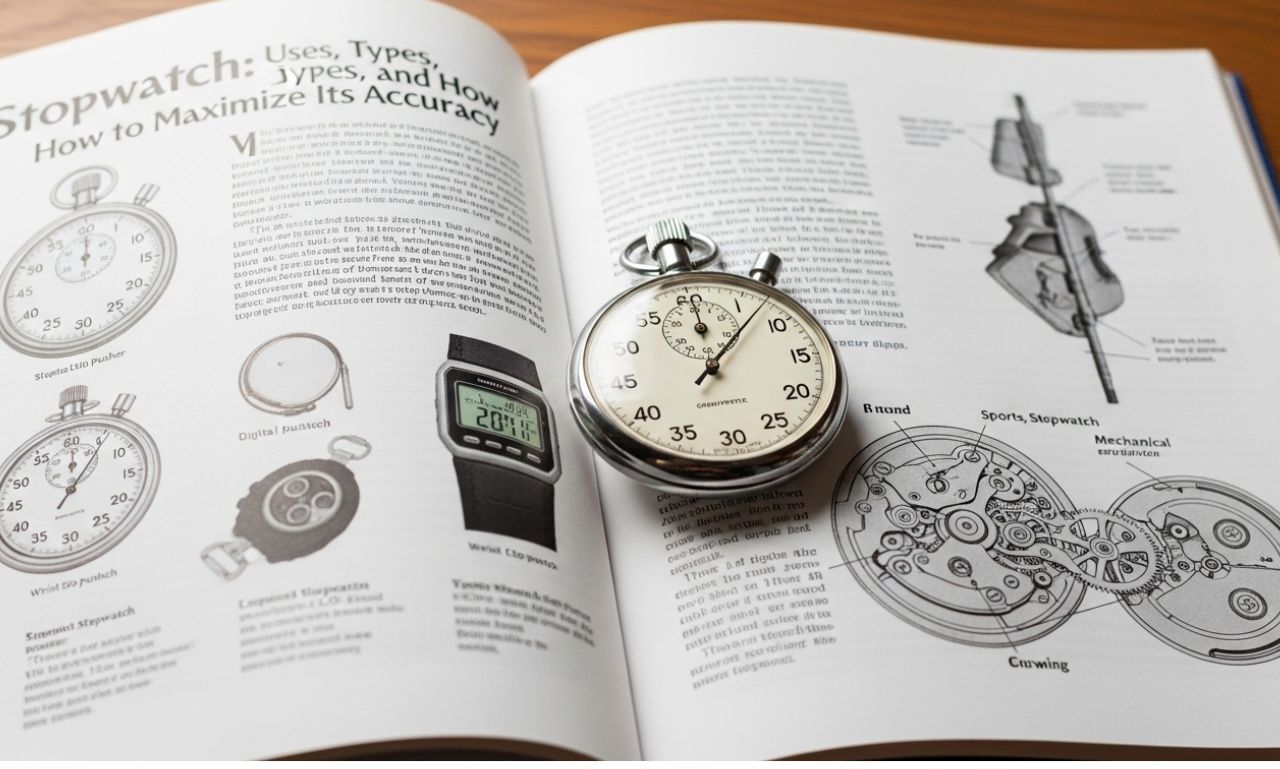
Stopwatch: Uses, Types, and How to Maximize Its Accuracy
A stopwatch is a device designed to measure precise intervals of time, making it essential in sports, experiments, and everyday activities. Unlike ordinary clocks, a stopwatch starts and stops on demand, giving accurate readings down to fractions of a second. From timing athletic events to tracking cooking durations or laboratory experiments, the stopwatch is a versatile tool. In this article, we explore the history, types, applications, and tips for using a stopwatch effectively.
History of the Stopwatch
Early Mechanical Stopwatches
The first mechanical stopwatches were invented in the 19th century, primarily for horse racing and competitive sports. These early devices used gears and springs to track time intervals, requiring manual activation and reset. Despite their simplicity, mechanical stopwatches offered unprecedented accuracy for the era.
Transition to Digital Stopwatches
With the rise of electronics, stopwatches became digital, offering higher precision and additional features. Modern digital stopwatches can measure milliseconds, split times, and even store data for multiple sessions. These innovations expanded the uses of the stopwatch beyond sports into scientific research and everyday tasks.
Types of Stopwatches
Mechanical Stopwatches
Mechanical stopwatches operate using gears and springs. They are typically wound manually and are known for durability and classic design. Athletes and collectors still appreciate them for their reliability and tactile feedback.
Digital Stopwatches
Digital stopwatches are electronic and use a digital display to show elapsed time. Features may include lap timing, countdown functions, memory recall, and alarms. Digital models are highly precise and often used in professional sports and laboratories.
Smartphone and Online Stopwatches
Modern smartphones and computers often include stopwatch applications, providing convenience without extra devices. While they may not match professional-grade devices in precision, they are sufficient for casual timing needs and quick measurements.
Applications of a Stopwatch
Sports and Athletics
In competitive sports, a stopwatch is essential for measuring performance. Coaches and athletes rely on stopwatches to track running times, swimming laps, and other timed events. Accurate timing can determine winners, set records, and monitor progress.
Scientific Experiments
Laboratory experiments often require precise timing to ensure accurate results. A stopwatch allows researchers to monitor reactions, control exposure durations, and record repeatable data with minimal error.
Daily Life and Productivity
Stopwatches are also useful in everyday tasks. From timing workouts, cooking, and study sessions to productivity exercises like the Pomodoro technique, a stopwatch helps measure and optimize time effectively.
Features to Look for in a Stopwatch
Accuracy
A reliable stopwatch should measure time precisely, ideally down to milliseconds for professional uses. Accuracy is critical in sports and scientific applications.
Lap and Split Time Functions
Many digital stopwatches allow recording of multiple laps or split times, which is useful for tracking performance in stages or repeated events.
Durability
For outdoor or athletic use, a stopwatch should be resistant to water, shocks, and extreme temperatures. Durability ensures long-term reliability.
Ease of Use
A simple interface with clear buttons for start, stop, and reset makes a stopwatch easy to operate under stress, especially during competitive sports or experiments.
How to Use a Stopwatch Effectively
Timing Races or Workouts
-
Start the stopwatch as soon as the event begins.
-
Record lap times if needed for interval training.
-
Stop the stopwatch immediately at the finish to ensure accuracy.
Laboratory Measurements
-
Ensure the stopwatch is reset before each measurement.
-
Use split-time functions to monitor multiple phases of an experiment.
-
Record data systematically to reduce errors.
Daily Applications
-
Set the stopwatch for tasks such as cooking or meditation.
-
Track study sessions to manage time effectively.
-
Cobine with alarms for reminders or structured routines.
Common Mistakes When Using a Stopwatch
-
Starting late or stopping late: Even slight delays can affect results.
-
Not resetting properly: Previous timings can interfere with new measurements.
-
Ignoring device limitations: Mechanical stopwatches may be less precise than digital ones.
-
Overcomplicating lap splits: Too many splits can lead to confusion if not recorded correctly.Avoiding these mistakes ensures that your stopwatch provides reliable and accurate data.
Advantages of Using a Stopwatch
-
Precision: Measures time intervals accurately.
-
Versatility: Useful in sports, labs, and daily life.
-
Portability: Many models are lightweight and easy to carry.
-
Motivation: Tracking time encourages efficiency and performance improvement.
Fun Facts About Stopwatches
-
Early stop watches were often gold-plated for prestige in sports competitions.
-
Some digital stop watches can measure up to 1/10,000th of a second.
-
The term “stop watch” comes from the ability to “stop” the timing at any moment during an event.
Conclusion:
A stop watch may seem simple, but its applications are vast and enduring. From professional athletics to scientific research and daily productivity, this tool helps measure time with precision, efficiency, and convenience. Whether mechanical, digital, or smartphone-based, the stop watch continues to be an essential device for anyone who values accurate timing.
Mastering the use of a stop watch can improve performance, enhance productivity, and provide reliable results across countless activities. It remains a small but indispensable tool in our modern, time-conscious world.