
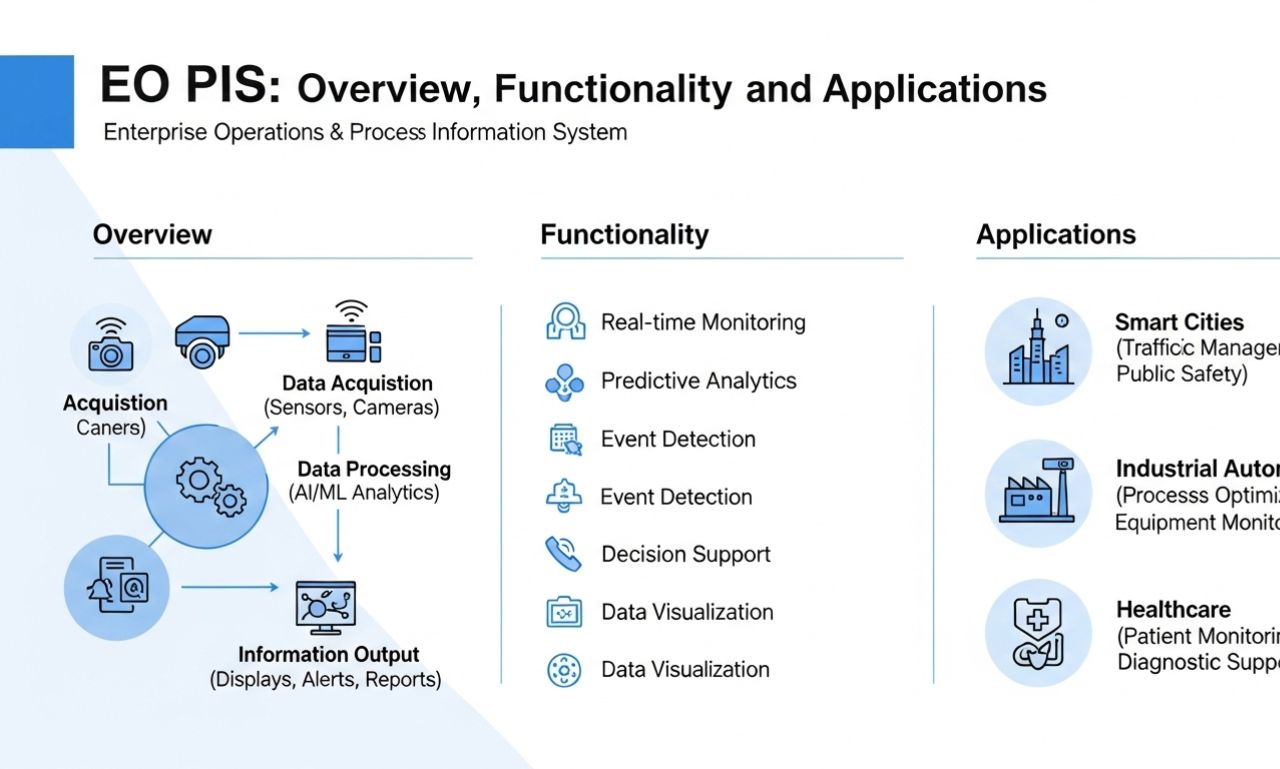
EO PIS: Overview, Functionality, and Applications
EO PIS is a term that has gained attention in specific technical and organizational contexts, often related to enterprise operations, information systems, or industrial processes. Understanding EO PIS, its purpose, and how it integrates into workflows is important for professionals and organizations seeking efficiency, accuracy, and streamlined operations.
Introduction to EO PIS
EO PIS typically refers to a system or module used for managing operational processes, data flows, or performance indicators. It can be part of a larger enterprise resource planning (ERP) system or a standalone platform designed to collect, process, and analyze information for decision-making purposes. Organizations that implement EO PIS aim to improve monitoring, reporting, and operational effectiveness.
Key Features of EO PIS
The main functionalities of EO PIS include:
-
Data Collection: Captures relevant operational data from multiple sources.
-
Performance Tracking: Monitors key performance indicators (KPIs) and metrics.
-
Reporting and Analytics: Generates reports to inform management decisions.
-
Process Integration: Connects with other systems for seamless workflow management.
-
User Management: Provides role-based access for secure and efficient system use.
These features allow organizations to optimize workflows, reduce errors, and enhance overall productivity.
Applications of EO PIS
EO PIS is applied across various sectors depending on the operational needs:
Industrial Operations
In manufacturing or industrial contexts, E O PIS can monitor production lines, track equipment efficiency, and ensure compliance with quality standards.
Enterprise Management
In corporate environments, E O PIS supports resource management, financial tracking, and operational reporting to improve strategic planning.
Public Sector or Utilities
Government organizations and utilities may use E O PIS to monitor infrastructure projects, manage resources, and enhance service delivery.
Advantages of Implementing EO PIS
Organizations that deploy E O PIS experience several benefits:
-
Enhanced Operational Efficiency: Streamlines processes and reduces manual work.
-
Better Decision-Making: Real-time data and reports provide actionable insights.
-
Improved Accuracy: Minimizes errors in data handling and reporting.
-
Scalability: Can adapt to growing organizational needs or additional modules.
-
Regulatory Compliance: Helps maintain standards and audits more effectively.
These advantages contribute to both short-term performance gains and long-term organizational success.
Challenges and Considerations
While E O PIS offers significant benefits, organizations should be mindful of:
-
Implementation Costs: Initial setup and training can be resource-intensive.
-
System Integration: Ensuring compatibility with existing software and processes.
-
User Adoption: Effective training is necessary to ensure consistent use.
-
Data Security: Protecting sensitive operational data from unauthorized access.
Addressing these challenges is crucial for maximizing the value of E O PIS systems.
Future Outlook of EO PIS
E O PIS is evolving with advancements in technology. Integration with AI, IoT, and cloud computing enhances real-time analytics, predictive monitoring, and remote accessibility. Organizations that adopt modern E O PIS solutions can gain a competitive edge through improved efficiency, accuracy, and strategic insights.
Conclusion
E O PIS is a vital tool for organizations seeking to optimize operations, monitor performance, and make data-driven decisions. From industrial production to enterprise management, E O PIS provides a structured approach to handling operational information, improving productivity, and ensuring accuracy. As technology advances, E O PIS systems are poised to become even more integral to organizational success.